


Payload Basics & the Right Setup for Your Trailer

Friday afternoon hits, and you’re thinking about the lake, the campground, or a quick run out of town with a utility trailer. In Iowa, weekend towing usually means boats, small campers, ATVs, and loads that grow fast once you add coolers, kids, and firewood.
That’s why the Tacoma vs Tundra choice matters. Both can tow, but they don’t handle the same trailer in the same way, and the difference usually comes down to payload, not horsepower.
If you’re shopping Toyota tucks locally and want a simple way to match the truck to the trailer, you’re in the right place. This guide breaks down the few numbers that matter, then ties them to real weekend setups.
Weekend towing basics that decide Tacoma vs Tundra
Most towing mistakes aren’t dramatic. They’re small, common, and they stack up. A trailer that “should be fine” starts to feel twitchy at 60 mph, the rear sags more than expected, or you realize the truck is already full before you even hook up.
Here are the numbers that actually decide whether a Tacoma or a Tundra fits your weekend towing plans:
- Trailer weight (loaded, not empty): That brochure “dry weight” is a best-case number. Add propane, battery, water, food, and gear, and the trailer is often hundreds (sometimes over a thousand) pounds heavier.
- Tongue weight: This is the downward force the trailer puts on the hitch. It counts against your truck’s payload like any other cargo.
- Payload: This is what the truck can carry inside the cab and bed, plus the tongue weight pushing down on the hitch.
- Wheelbase and truck weight: A larger, heavier truck often feels calmer with the same trailer. You notice it most in wind and when semis pass.
One more thing: ratings change a lot by trim, cab, bed length, drivetrain, and options. A sunroof, bigger tires, skid plates, and a heavy bumper can all reduce what you can carry. The only way to know your exact limits is to check the door jamb sticker for payload and the owner’s guide for towing details.
Also, Iowa conditions can make a trailer feel heavier than the scale says. Wind across open fields, rolling hills, and gravel roads can all add stress to the setup and push you toward a more stable truck choice.
Towing capacity vs payload, what each number actually means
Towing capacity is the maximum weight the truck can pull, under the right configuration, with the truck loaded in a specific way. It’s important, but it’s not the full story.
Payload is how much weight the truck can carry on its own tires. That includes people, gear, accessories, and the trailer’s tongue weight.
Tongue weight is part of the trailer’s weight, but it rides on the truck. For many trailers, a typical target is about 10 to 15 percent of the trailer’s loaded weight (check your trailer guidance too).
GVWR (Gross Vehicle Weight Rating) is the most the truck itself is allowed to weigh when loaded up (truck, passengers, cargo, hitch equipment, and tongue weight included).
A plain-language example helps. Say you have a 5,000 lb trailer loaded for a weekend. If tongue weight is 10 to 15 percent, that means 500 to 750 lb is pressing down on the truck. That 500 to 750 lb is not “free” just because you’re towing. It comes straight out of payload.
The payload math that surprises most weekend towers
Payload gets used up faster than people expect because it’s not just “stuff in the bed.” It’s everything added to the truck.
What counts against payload?
Passengers (including car seats), the dog, coolers, firewood, tools, a bed cap, a hitch ball mount, and the trailer’s tongue weight. Even a full tank of fuel and added accessories can change the feel and margin.
Use this simple method before you commit to a truck:
- Find payload on the driver door jamb sticker.
- Estimate people and cargo you’ll bring every trip.
- Subtract estimated tongue weight.
- See what’s left for “nice-to-have” gear.
This is where many buyers notice the gap between mid-size and half-ton trucks. Half-ton trucks often have more payload margin than mid-size trucks, depending on configuration, and that margin can be the difference between a comfortable tow and a white-knuckle drive.
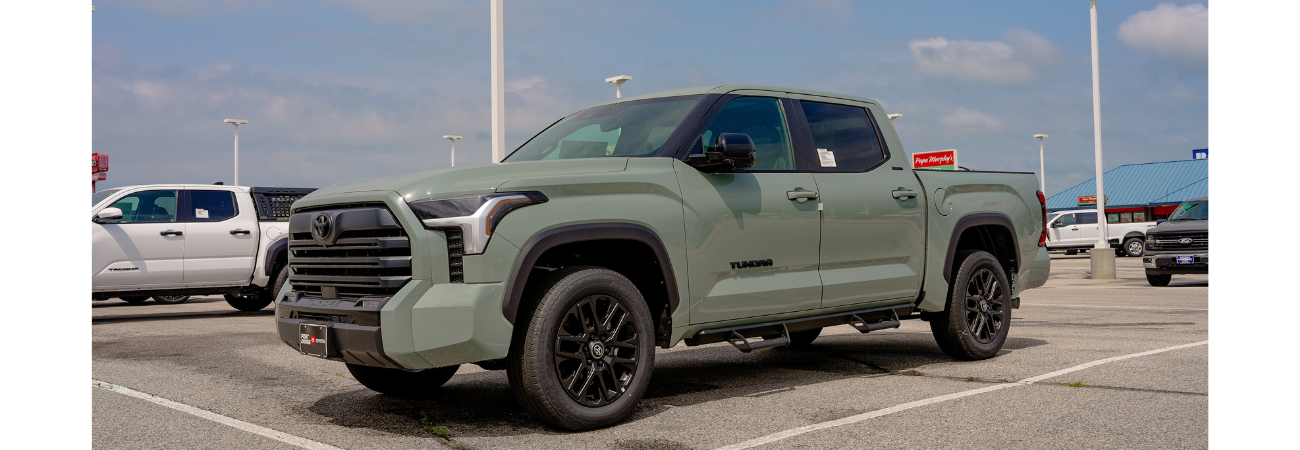
Match your trailer to the right truck, Tacoma or Tundra
Think of towing like carrying a couch up stairs. You can do it with two people if the couch is light and the hallway is wide. Add tight corners and a third-floor landing, and you’ll wish you brought more help. Trailers work the same way. You can tow within limits and still feel overmatched if you’re near the edge on payload or stability.
Below are common Fort Dodge area scenarios and what usually fits best.
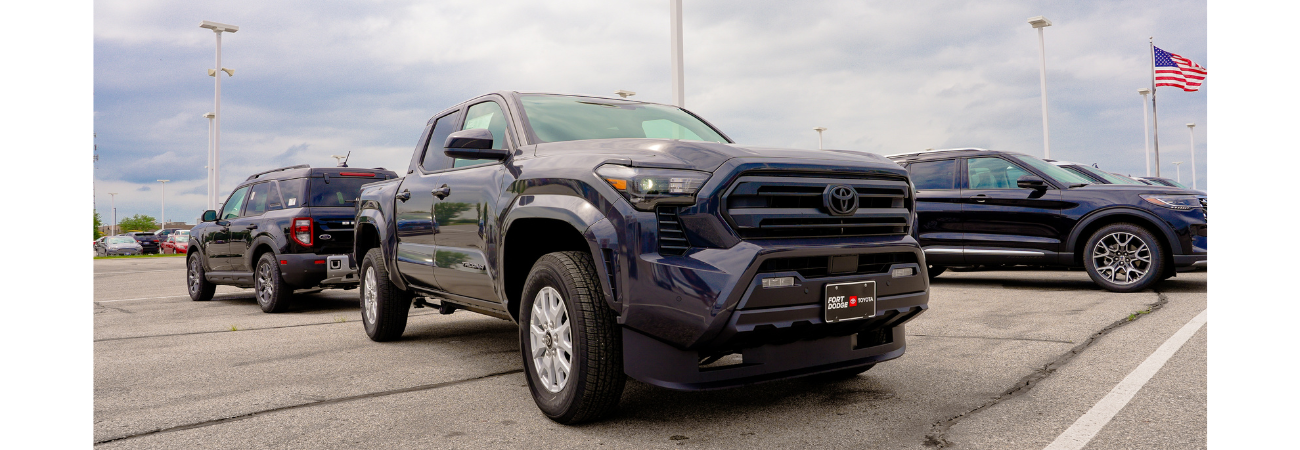
When a Tacoma setup fits best (lighter trailers, tighter parking, simpler weekends)
A Tacoma is a strong pick when your towing life is more “grab the keys and go” than “pack the house and head out.”
Tacoma setups often fit well for:
- Small fishing boats and simple single-axle boat trailers
- ATV and utility trailers
- Light single-axle campers (when loaded weight and tongue weight stay modest)
- Occasional towing, not every weekend on the interstate
The daily driving perks are real. It’s easier to park in town, easier to fit in many garages, and running costs can be lower for some drivers.
A few setup tips that matter with a mid-size truck:
- Use a quality brake controller when your trailer has brakes (many campers and heavier utility trailers do).
- Keep tongue weight in the right range, too light can cause sway, too heavy can overload payload.
- Load heavy items low and forward in the trailer so it tracks straight.
- If payload is tight, don’t pack the bed to the rails. Move some gear into the trailer (if the trailer can handle it safely).
When a Tundra setup makes towing easier (more payload margin, more stability, more room)
A Tundra tends to feel calmer when the trailer is taller, heavier, or used more often. Part of that is simple physics. More truck weight and longer wheelbase options can reduce “push-pull” motion, especially in crosswinds.
Tundra setups often fit better when you have:
- A family of four plus gear (payload disappears fast with passengers)
- A heavier travel trailer or a camper with a higher tongue weight
- Frequent interstate runs across Iowa
- Lots of wind, or trips where passing traffic makes the trailer dance
A few setup tips that matter with a larger travel trailer:
- Use a weight-distributing hitch when appropriate for your trailer and truck. Many travel trailers benefit from it.
- Make sure the trailer has working brakes, and that the controller is adjusted for smooth stops.
- Check tire pressure on both truck and trailer. Low pressure can make sway worse and heat tires fast.
Build a safe, comfortable towing setup, hitch, brakes, and a quick checklist
The best towing setup isn’t fancy. It’s the one that’s loaded right, adjusted right, and checked every trip. Even a well-matched Tacoma or Tundra can feel bad if the hitch height is off or the trailer tires are soft.
If you’re adding towing equipment or want it inspected before camping season, scheduling time with a shop that handles truck service helps. The Fort Dodge Toyota service center is a good starting point for maintenance that supports towing confidence (brakes, tires, inspections, and more).
Hitch and control basics, brake controller, sway control, and weight-distributing hitch
Brake controller: Sends braking power to trailer brakes. It can shorten stops and reduce that “trailer pushing the truck” feeling, especially on wet Iowa roads.
Sway control: Helps resist side-to-side movement. It’s most useful on taller trailers and in wind.
Weight-distributing hitch: Uses spring bars to spread some tongue weight forward to the front axle and back to the trailer axles. Not every trailer needs one, but many travel trailers do, and it can improve steering feel and stability when set up correctly.
Pre-trip checklist for Iowa weekend towing
- Confirm your payload math (people, cargo, tongue weight)
- Double-check your tongue weight estimate and how the trailer sits
- Set tire pressures on truck and trailer
- Test lights (brake, turn, running) and trailer brakes
- Secure the load, latch coupler, cross safety chains, pin the hitch
- Adjust mirrors so you can see down both sides
- Slow down, leave space, and avoid sudden inputs
- Recheck hitch, straps, and temps after 10 minutes of driving
Conclusion
If your weekends involve lighter trailers and lighter loads, a Tacoma can be the right tool, and it’s easy to live with Monday through Friday. If your trips stack passengers, gear, and a travel trailer, the Tundra usually wins on payload margin and stability, which makes towing feel less stressful.
Bring your trailer type, estimated loaded weight, and passenger count when you compare trucks. Then match the configuration to your real weekends, not a best-case brochure trip. The right choice feels steady, stops with confidence, and keeps you comfortably under the numbers.